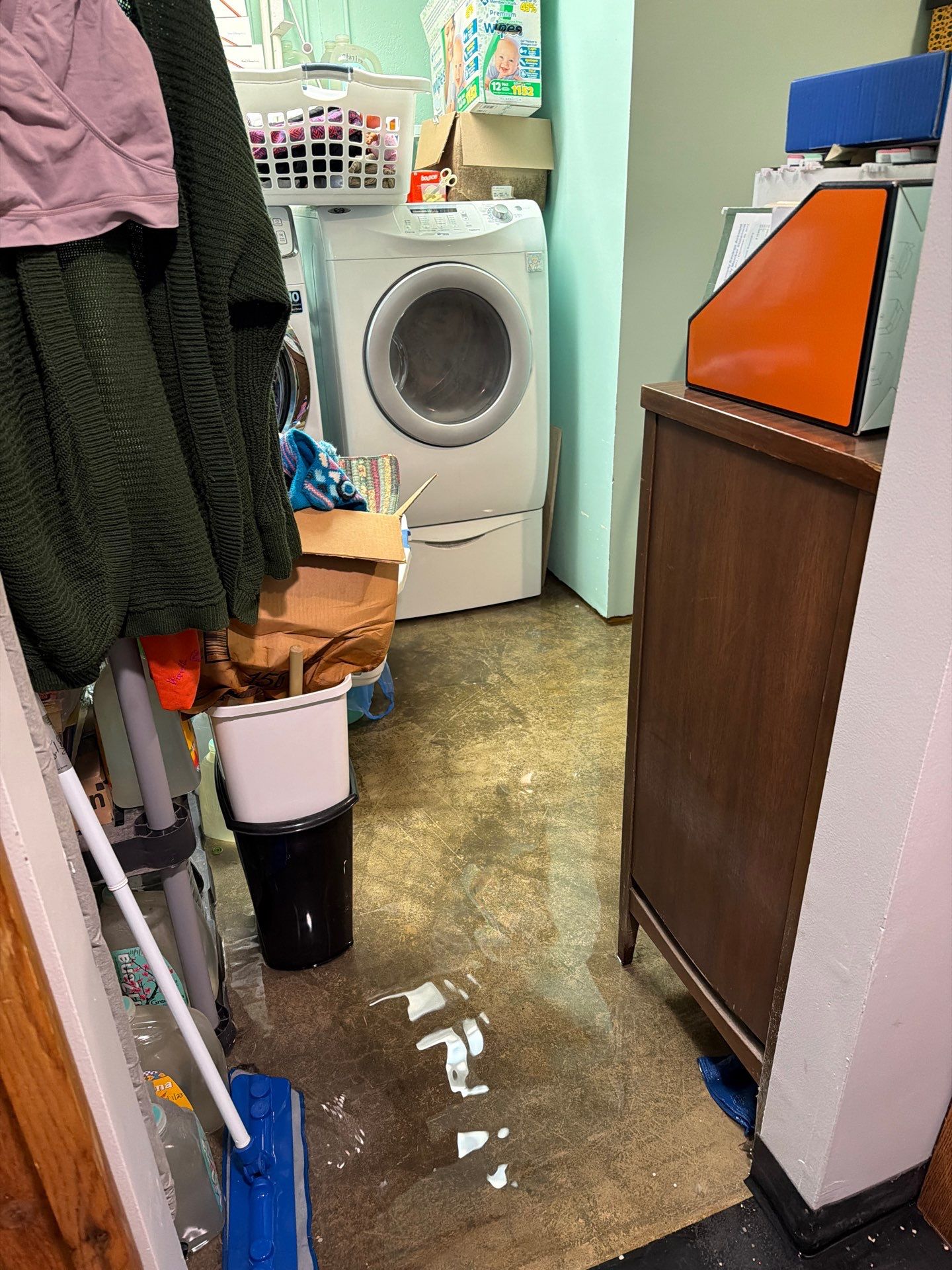
Why the Estimate Itself Is the Most Important Hour of the Job
Most homeowners think the work starts when the air movers turn on. It actually starts the moment a technician walks through your door with a moisture meter. Everything that follows, the equipment count, the demolition scope, the insurance reimbursement, the drying timeline, traces back to what was documented in that first hour. A weak inspection produces a weak estimate, and a weak estimate produces either an underpaid claim or a job that balloons in cost halfway through because hidden wet areas were missed.
In Crothersville, we routinely get called as the second opinion after a homeowner accepted a verbal estimate from a competitor and then discovered, two weeks later, that the subfloor under the kitchen island was still saturated. By then mold spores are already colonizing, the original contractor wants a change order, and the insurance carrier wants to know why this was not in the original scope. The fix would have taken 30 extra minutes of meter readings during the initial visit. That is the gap between a free walkthrough and a real free inspection.
A proper estimate also protects you legally. If you sign a work authorization based on a vague verbal number, you have agreed to whatever the contractor decides the work is worth. A written scope with line items, room dimensions, affected materials, and equipment days gives you a contract you can enforce and an adjuster can verify. For deeper context on how scopes translate into final billing, our breakdown of water damage restoration cost walks through the math line by line.
There is also a quieter benefit that homeowners often overlook. A thorough estimate forces the technician to slow down and actually understand the loss before quoting it. When a Crothersville Water Restoration estimator spends 60 to 90 minutes in a flooded home, they are not padding time. They are pulling baseboards in suspect corners, checking the cavity behind the dishwasher, lifting carpet edges in the closet that shares a wall with the burst pipe. Every one of those checks either confirms the scope or expands it, and either outcome is better than discovering the truth after demolition has already committed you to a path.
Real Inspection vs Surface Walkthrough: What You Are Actually Getting
The table below shows what Crothersville Water Restoration includes in a free Crothersville water damage inspection compared to the lighter version many homeowners encounter. Read it before you let anyone start tearing out drywall.
| Inspection Element | Crothersville Water Restoration Free Inspection | Typical Quick Estimate | Why It Matters to Your Claim |
|---|---|---|---|
| Moisture mapping | Every affected room metered, readings logged with location | Visual check, maybe one meter reading | Adjusters require documented moisture levels to approve drying days |
| Thermal imaging | Used on walls, ceilings, and floors to find hidden saturation | Rarely used, relies on what is visible | Hidden water behind walls causes the mold claims filed 30 to 60 days later |
| IICRC water category | Classified as Cat 1, 2, or 3 with reasoning documented | Often skipped or guessed | Category drives PPE, disposal rules, and reimbursement rates |
| Class of loss (1-4) | Determined by square footage of wet porous material | Not addressed | Class dictates equipment count, which dictates cost |
| Written scope of work | Itemized line by line, room by room, with photos | Verbal number or one-page summary | Carriers reimburse line items, not lump sums |
| Photo documentation | 50+ photos minimum on average loss | 5 to 10 phone snapshots | Photos are your evidence if the claim is disputed |
| Affected materials list | Drywall, insulation, flooring, cabinets, trim each noted | General description only | Missed materials become out-of-pocket later |
| Equipment plan | Air movers and dehu count calculated to S500 standard | Eyeballed by experience | Under-equipped jobs extend drying days and grow mold |
| Insurance coordination | Direct communication with adjuster, Xactimate-compatible scope | Homeowner left to translate | Speeds approval, reduces denied line items |
| Cost to homeowner | Free, no obligation, written copy provided | Free, but verbal only | Only one of these holds up in a dispute |
| Timeline given | Drying schedule with daily monitoring dates | "A few days" estimate | Lets you plan tenants, work-from-home, pets |
What to Do With the Estimate Once You Have It
A written estimate from Crothersville Water Restoration is not a sales document. It is a working file. The first thing to do is send it to your insurance carrier the same day, ideally before any demolition begins, so the adjuster has a chance to inspect or accept the scope. Carriers move faster when they receive a scope that already speaks their language, with category, class, and Xactimate-style line items. Our guide on 24 hour water damage restoration covers the timing rules that prevent a claim from being denied for delay.
The second thing is to compare bids honestly. If another Crothersville contractor comes in 30 percent lower, look at what is missing from their scope, not just the bottom number. Lower bids almost always skip insulation removal, antimicrobial application, or post-drying moisture verification. Those steps are not optional under IICRC S500, and skipping them is how mold claims get filed against the original restoration company a year later. If you are weighing options, our piece on choosing a water damage company near you gives the questions to ask before you sign.
Finally, do not feel pressured to sign during the inspection itself. A reputable restoration company in Crothersville will leave the written estimate with you, answer questions by phone, and start work when you are ready. The only exception is active Category 3 water, where delay creates a health hazard and immediate extraction is the right call.
Questions to Ask Before the Estimator Leaves
Before the technician packs up the moisture meter, take ten minutes to ask the questions that turn a piece of paper into a defensible plan. Ask which rooms were metered and which were not, and why. Ask for the specific moisture readings in the worst affected wall, not just an average. Ask whether the scope assumes drywall removal at two feet, four feet, or full height, since that single decision can change the rebuild cost by thousands. Ask how many drying days the equipment plan assumes, and what happens if daily monitoring shows the structure is not on track. The answers should be specific, written, and consistent with the documentation in your hand.